Website planning guide · Bahrain
How to plan a small-business website in Bahrain
A smaller website becomes more useful when every page has a job. This planning process helps an owner decide what to build before choosing colours, a platform or a designer.
The useful numbers, with the conditions attached.
- Start with the customer action the website must make easier, not a list of fashionable pages.
- Choose a focused first release that the business can keep accurate after launch.
- Assign an owner for copy, images, approvals and account access before work starts.
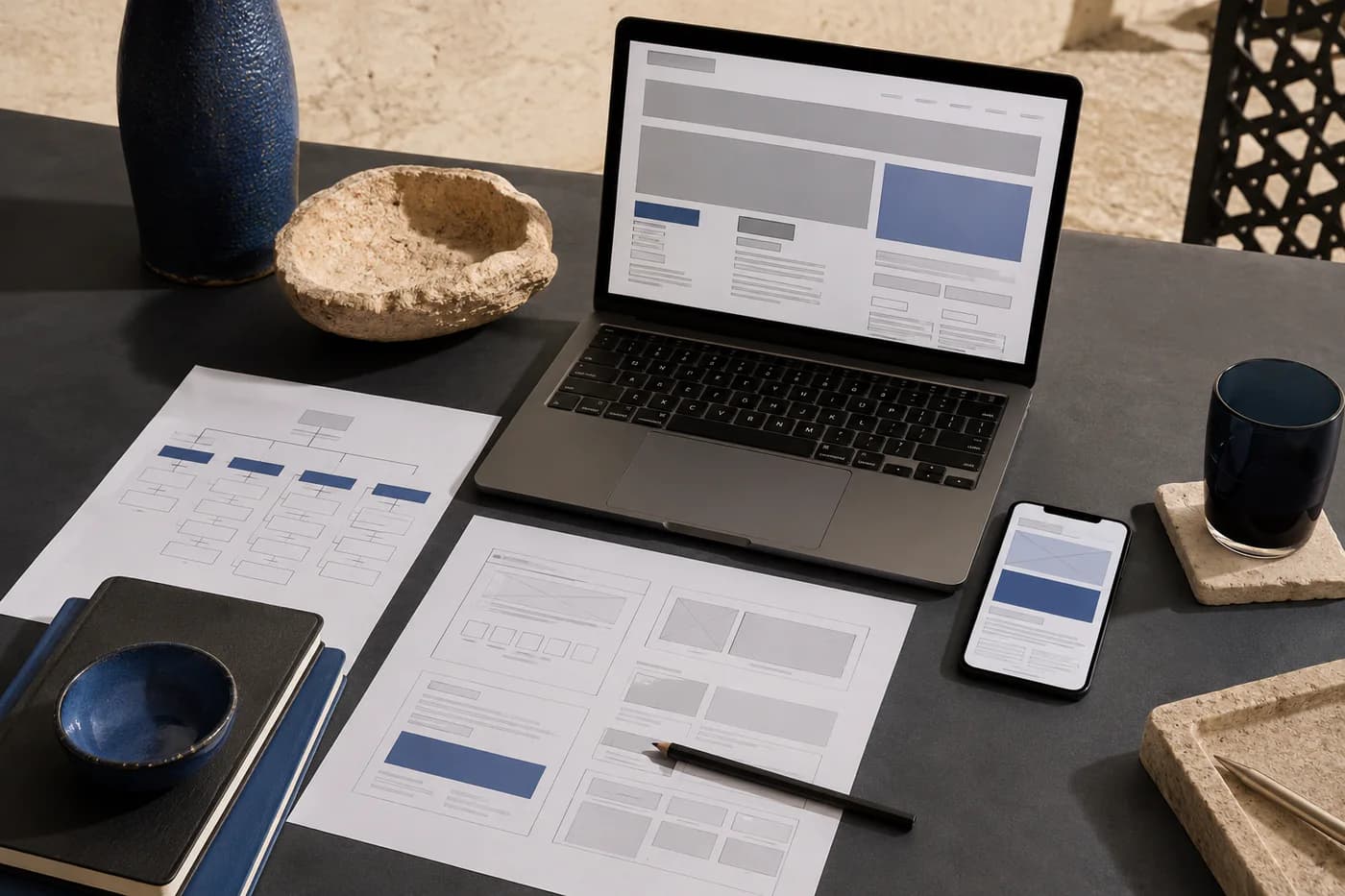
Give the website one primary business job
A website can support several things, but it needs a primary job. For a Bahrain service business, that may be qualified WhatsApp enquiries; for a restaurant, an accurate menu and directions; for a consultant, credible service information before a call. Naming the job changes which information earns space on the homepage.
Write down what a visitor should understand and do in their first minute. If the answer is vague—‘learn about us’—the brief is not ready. A clearer answer such as ‘see whether we cover their area and request a quote’ gives design, copy and measurement a shared decision point.
- Primary visitor and their immediate question
- One main action and one sensible fallback action
- What counts as a useful enquiry or visit
- Which promises the team can actually fulfil
Next decision: Planning an Arabic and English website in Bahrain. If you want this applied to a live site, see the web development scope.
Build the smallest useful page structure
Do not start with a competitor’s menu and assume every item belongs on your site. Group the information customers need to make a decision: the offer, relevant services, proof, practical details and contact. A focused site can be more convincing than a broad site with thin, repeated pages.
Plan page types rather than only page names. A service page may need scope, process, examples, common questions and a way to enquire; an about page may need people, approach and location context. That distinction prevents the common mistake of giving every page the same generic block of text.
- Homepage
- Core service pages
- About or team information
- Proof: projects, testimonials or credentials
- Contact and practical information
Prepare evidence before the visual work
Design can organise good material; it cannot manufacture business evidence. Collect the service details, operating areas, current phone numbers, photographs, project permissions and answers customers hear repeatedly. For Arabic and English content, decide which language is the source and who confirms that the second version says the right thing.
Set an approval route early. One person should consolidate feedback and confirm facts, especially when several partners or departments contribute. It keeps a designer from receiving contradictory amendments and protects the launch date from an endless cycle of minor rewrites.
- Approved business name, contact details and hours
- Service descriptions and exclusions
- Original photography or a realistic shot plan
- Permissions for testimonials, logos and project images
- Named content approver and review date
Plan the ownership and launch work too
The public pages are only one part of a website. Decide who owns the domain account, hosting account, analytics access and any paid tools. The business should be able to recover these accounts and renew services without depending on a former supplier.
Make a short launch list while planning, not at the end. It should include form tests, contact-route checks, mobile review, legal or policy text the business has approved, redirects for replaced pages and a simple record of where access is held. This is how a website becomes an operating asset rather than a one-time presentation.
- Domain and hosting ownership
- Enquiry routing and response responsibility
- Pre-launch testing
- Post-launch update owner
- A record of renewal dates and account access
Common questions
Questions worth settling before you commit.
How many pages does a small business need?
Enough to answer the main customer questions clearly. Many businesses begin with a homepage, focused service pages, proof, practical information and contact; the right number depends on how distinct the services are.
Should I choose a platform before planning the website?
Usually no. Choose the required publishing, ecommerce, language and maintenance needs first, then assess platforms against those needs.
Who should approve website content?
Name one accountable business owner who can consolidate feedback and verify facts. Specialists can contribute, but dispersed approval often delays launch.